|
|
 |
|

This is the height of the mountain above sea level. However, on the climb, it is the ascent that matters, i.e. the sum of all the uphill parts of the route.
| Altitude |
|
1010 m (3313 ft)
|
This is the standard notation used on Ordnance Survey Landranger maps.
Each reference consists of two letters identifying a 100,000 metre square block then three digits defining the Easting and finally the three digits defining the Northing with reference to the South West corner of the block.
NN166712 is the grid reference for the summit of Ben Nevis. Where you are given the map number ( For Ben Nevis = 41) it is acceptable to omit the two initial letters e.g. 166712. (Instructions on how to read the references are given on the OS maps).
| Grid Ref. |
|
NG95146115
|
|
|
|
An indication of this mountains height rank within its class. Where two mountains share the same height they are ordered alphabetically.
| Stature |
|
120 of 282 Munros |
|
The number of ascent routes currently available on Munromagic.
| Routes |
|
1
|
|
|
|
Mountain names are usually in Gaelic, the native language of the Scottish Highlands, or have been derived from the old Scots and Norse languages. We give the most commonly accepted meaning, but accept that some of these are disputed.
| Meaning |
|
Big red stack (File Mountain) |
|
| |
The UK is covered by 204 Ordnance Survey Landranger 1:50,000 scale maps. Maps numbered 1 to 86 cover Scotland but for the highest mountains (Munros) only 23 maps are required. The name given roughly describes the area covered by the map.
|
OS Landranger Maps Required |
|
|
| 19 |
Gairloch & Ullapool, Loch Maree |
|
|
|
|
|
|
Beinn Eighe is a complex mountain with many peaks and corries, the most beautiful of which is Coire Mhic Fhearchair with its loch and the towering triple buttress at its head; Sail Mhor forming the W slopes and Ruadh-stac Mor the E. Ruadh-stac Mor is a spur off the main ridge in the form of a cone elongated NNW-SSE it has steep stony/boulder slopes to Coire Mhic Fhearchair and steep craggy slopes to the N and E. To the S it is connected to Coinneach Mhor at a high col which is the normal ascent route.
|

|
Hazards you may encounter on Ruadh-stac Mor include
|
| Stony/rocky Slopes on or near ascent routes. |
|
| Crags on or near ascent routes. |
|
| Scrambling (minor), easy hand and footholds. |
|
|
| |
|
General Considerations
|
| Temperature decreases by 1degree C for every 100m of ascent. |
|
| Wind usually increases with altitude. |
|
| Visibility can change markedly with cloud level. |
|
| River/Stream levels can increase markedly in one day. |
|
|
|
 |
|
|
|
|
|
|
|
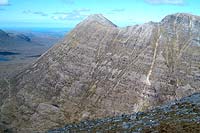
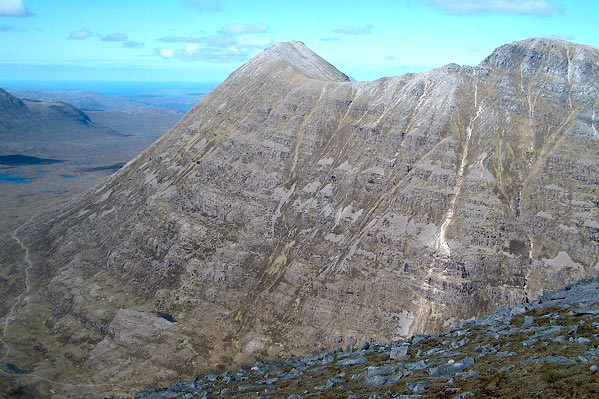
The Coire Dubh Mor track leading to Coire Mhic Fhearchair skirting Sail Mhor and Coinneach Mhor, taken from east of Spidean a' Choire Leith (Liathach).
© David S Brown
|
|
Image by David S Brown
|
|
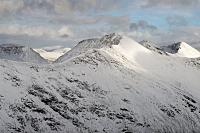
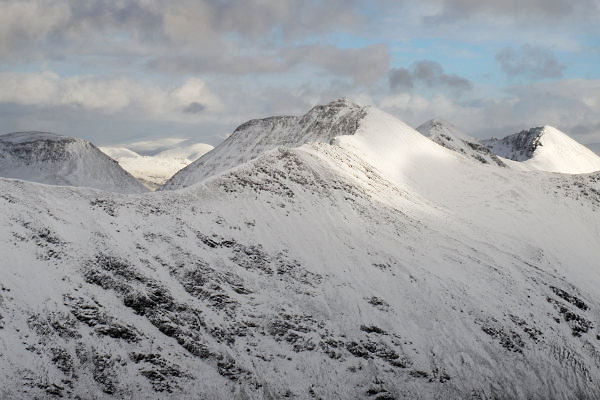
Beinn Eighe from Liathach, a snowy November lunchtime, 2006
© Michael Stephens
|
|
Image by Michael Stephens
|
|
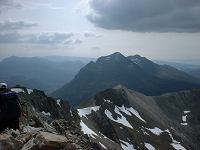
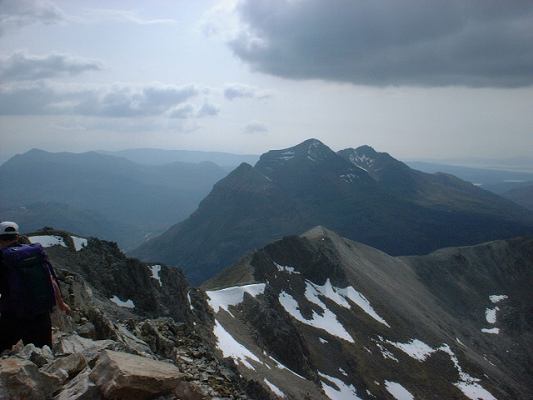
On the ridge between Ruadh-Stac Mor and Spidean Coire nan Clach looking to Liathach.
© Jim Hunter
|
|
Image by Jim Hunter
|
|
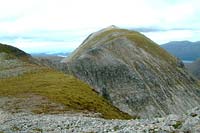
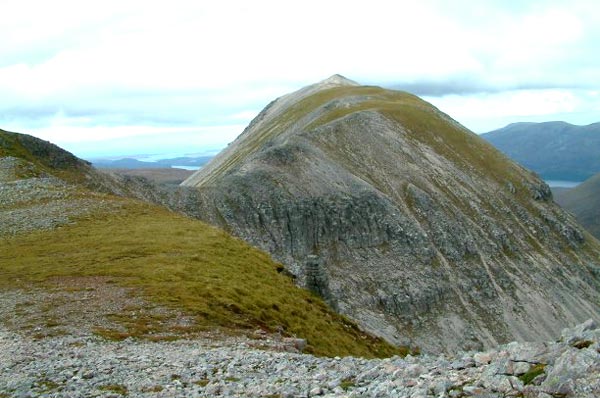
Ruadh-stac Mor seen from the East Ridge.
© Peter Chisholm
|
|
Image by Peter Chisholm
|
|
|
|
|
|
|
|
|
|
|
|
|
|
|
|
|
|
Ascent
|
Distance
|
Time
|
Including...
|
Description
|
Rating
|
|
|
1
|
1263 m
|
18.38 km
|
6 hrs
|
Ruadh-stac Mor and Spidean Coire nan Clach
|
A Scottish classic with the magnificent triple buttress in Coire Mhic Fearchair. A moderate route, but the traverse of Beinn Eighe including the triple buttress (highly recommended) is more difficult as it requires scrambling.
|

|
|
|
|
|
| |
|
|
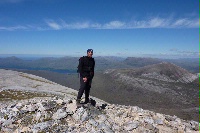
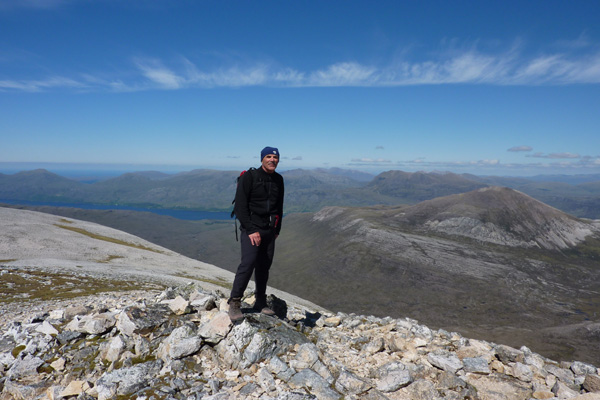
What more can you want, a clear day with a view across Loch Maree 01/06/12
© Steve Marlow
|
|
Image by Steve Marlow
|
|
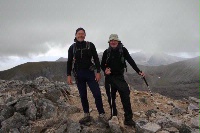
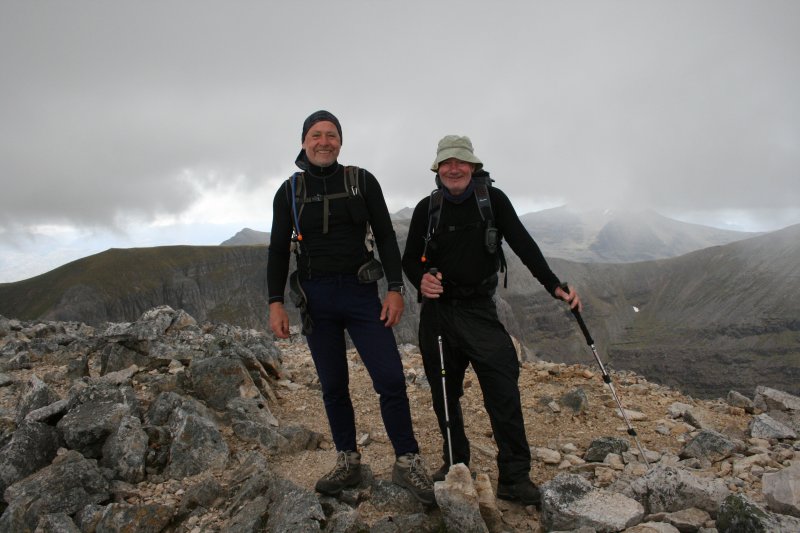
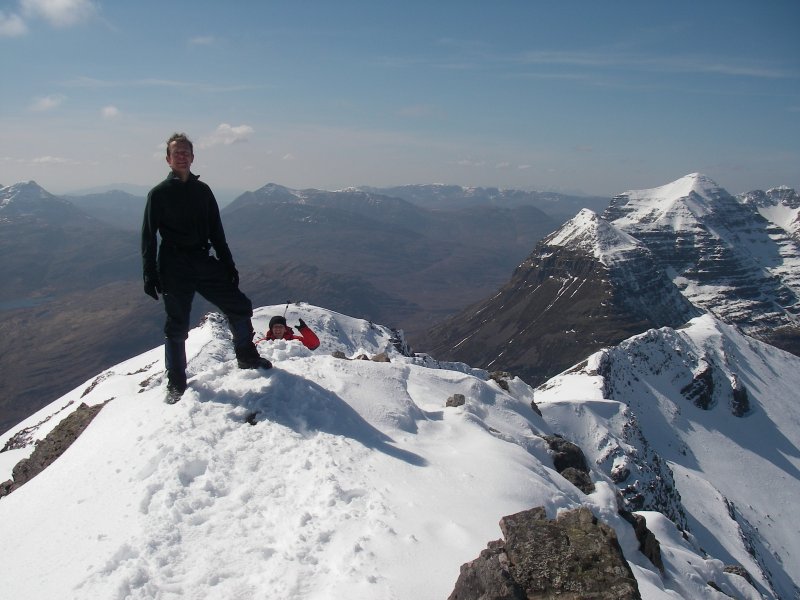
31st May 2012. Brothers David and Robert Lawson on the summit of Ruadh
Stac Mor on Beinn Eighe.
© David Walsh
|
|
Image by David Walsh
|
|
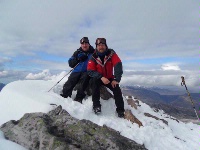
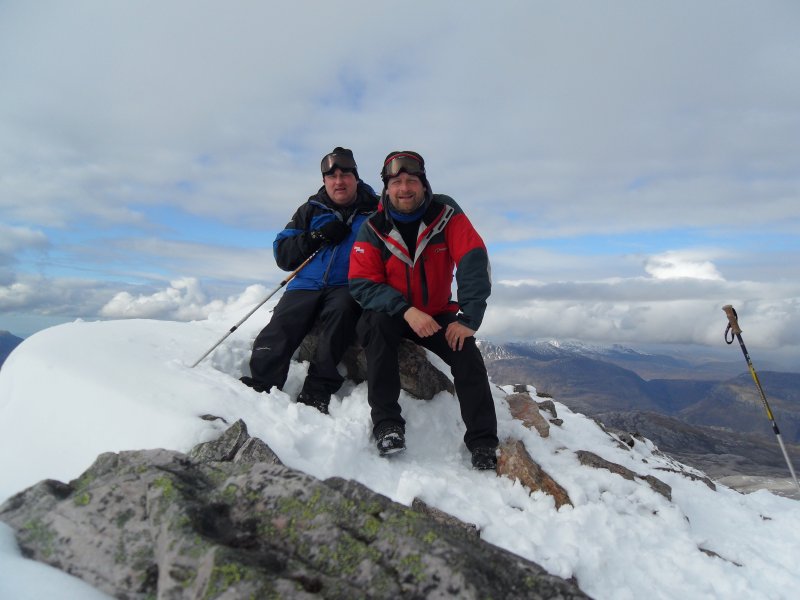
Tosh & martin on the summit of Spidean Coire nan Clach.
© Martin Gibb
|
|
Image by Martin Gibb
|
|
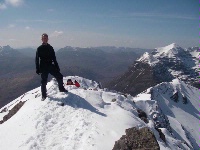
Beinn Eighe; 20th April 2008 on top of Sgurr Ban
© Oliver Bartrum
|
|
Image by Oliver Bartrum
|
|
|
|
|
|
|
|
|
|
|
|
 |
| |
| Showing the most recent 5 of 6 comments. Would you like to view all 6? |
|
|
John Gilchrist
wrote on
June 9, 2014
|
The scree seems to be everyone's crux on this hill. And understandably. It's loose and unstable. But if you keep to the extreme left there's lots of escape points onto solid rock. Some 'hands on' but nothing demanding.
|
|
|
|
John Strachan
wrote on
July 13, 2012
|
The scree from the corrie was no problem, the rock that tripped me on the bealach between the Munros was- headlong onto rocks, grazed, dislocated thumb, bashed up knee! Teach me to keep eyes on the ground on the uneven terrain. Limping, I "escaped" straight towards the car park-and that's where the real terrifying srees are. At one point I thought, what if a stone avalanche were to start, and to oblige, one did, with the strong smell of flint left where I had been standing, before leaping clear. And the day- Friday 13th!
|
|
|
|
Nick Bulbeck
wrote on
August 14, 2009
|
I started out from the Glen Torridon approach so I came, in due course, to the aforementioned scree slope from above. In the end I returned the way I'd come, due to time constraints, but I have to say I didn't much like the look of the scree! On a more positive note, the scramble between Coinneach Mhor and Sail Mhor is everything scree slopes aren't - sound rock, and a (short) vertical pitch for good measure. The setting is as good as any I can remember.
|
|
|
|
Lesley Punton
wrote on
January 26, 2008
|
The scree slope, whilst eroded, is nowhere near as bad as it is sometimes made out to be. I hate scree and was dreading this bit of the hill but actually found it was really pretty easy. There's a fairly solid and less steep path if you aim quite high from the beginning of the scree chute (briefly going over a boulder field) and if you keep to the left of the scree you can walk up easy blocks like a staircase onto the ridge. Good fun in fact.
|
|
|
|
Alan Morris
wrote on
September 6, 2005
|
I have to disagree with Mr Schmidt and say that the badly eroded scree slope provides the most enjoyable part of the Beinn Eighe walk. Although, I do take his point that it is badly eroded. Quite simply if you don't like slippery scrambling then go the back way, from Glen Torridon.
|
|
|
| |
|
|
|
|
|

|
|
|
|
There are no Route Write-Ups submitted for Ruadh-stac Mor
|
|
|
|
|
|